Wiring Repair
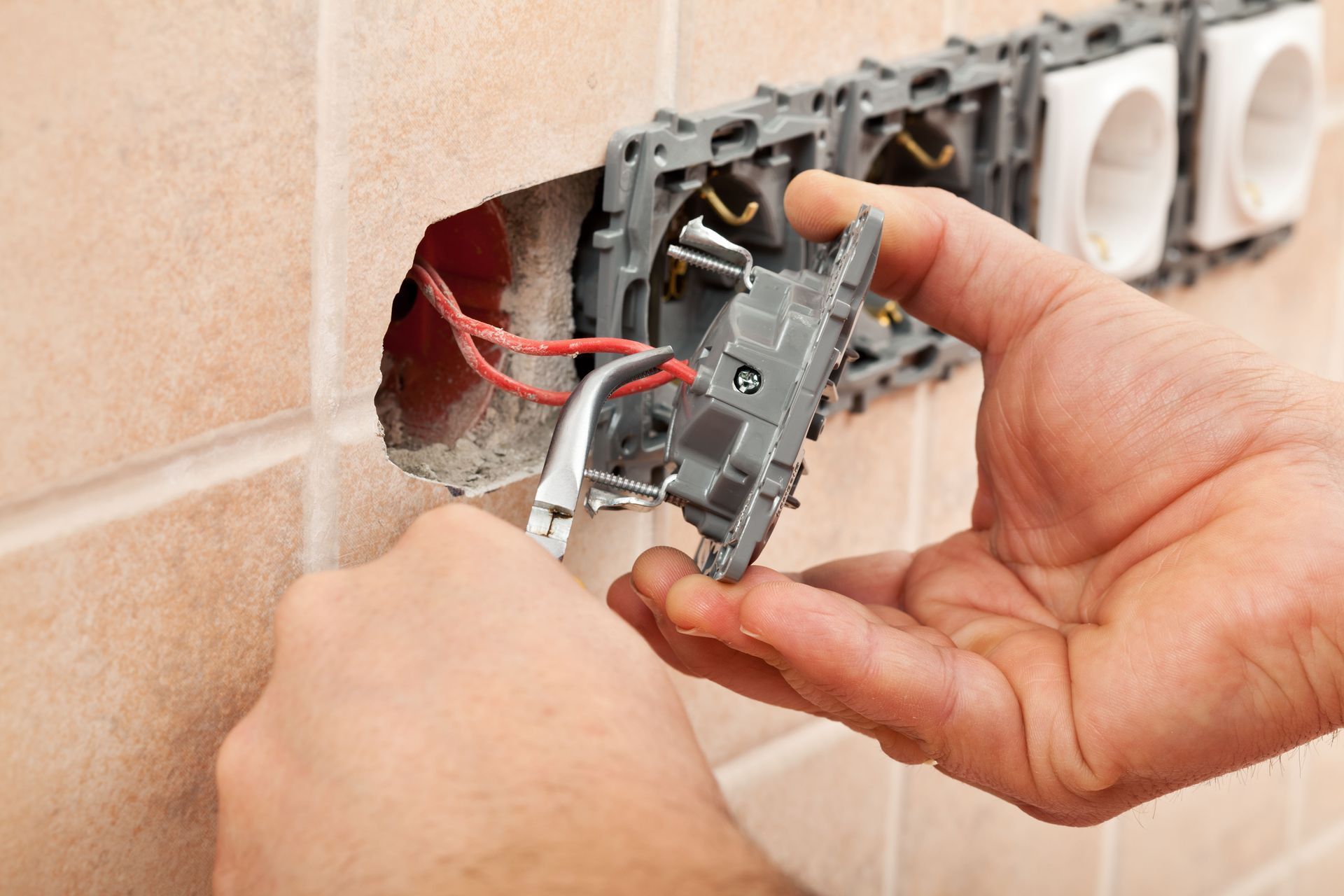
Wiring Repair in Rochester, MN
A burning smell near an outlet, fixture, or wall, warm spots on a wall or faceplate, or visible scorching means stop and shut off power to that circuit at your panel if it's safe to do so. Wiring faults are the electrical problem most likely to become a fire, and they don't improve on their own.
Same-day services and repairs are available in Rochester. If something smells hot or looks burned, get in touch right away rather than waiting for business hours.
Signs of a Wiring Problem
Wiring rarely fails all at once. It gives warning first, usually through the devices connected to it:
- Breakers that trip repeatedly across different circuits
- Lights that flicker or dim when appliances start
- Buzzing from outlets, switches, or inside walls
- Burning smells near fixtures, outlets, or walls
- Warm or discolored outlet and switch covers
- Sparks when plugging in an appliance
- Two-prong ungrounded outlets throughout the house
- Frequently blown bulbs on the same circuit
- Cloth-insulated or brittle wiring visible in the basement or attic
Several of these at once, or any of them in an older home that has never been evaluated, is worth a professional look rather than a wait-and-see.
Wiring Problems We Handle
Damaged & Deteriorated Wiring
Insulation hardens and cracks with age and heat, terminations loosen, and splices made years ago by someone in a hurry become the weak point. We locate the damage and repair it properly rather than patching around it.
Knob-and-Tube Wiring
Common in Rochester's older housing stock and ungrounded by design. It isn't automatically an emergency, but it doesn't tolerate modern loads, insulation contact, or decades of amateur modification — and most of what we find has been modified.
Aluminum Branch Wiring
Used widely in homes built in the mid-1960s through the 1970s. The wire itself isn't the issue so much as the connections, which loosen and overheat over time. There are accepted methods for making it safe short of a full rewire, and we'll walk you through them.
Overloaded & Overextended Circuits
Finished basements, added garages, and home offices frequently get spliced onto circuits that were never sized for them. The fix is usually a properly run dedicated circuit, not a bigger breaker.
Rodent, Water & Renovation Damage
Chewed insulation in an attic, water intrusion into a wall cavity, and a drywall screw through a cable are all common and all repairable once found. Finding them is most of the work.
What You Get With Every Repair
- Same-day services & repairs available
- Estimates within 1–3 business days
- Class A Electrical Contractor, License EA 006322
- Certified, licensed & fully insured electricians
- Quality products on every repair
- Locally & family-owned in Rochester since 1998
- Satisfaction guaranteed
How to Decide Between Repair & Rewiring
Not every wiring problem calls for tearing open a house. A damaged run, a bad splice, or one overloaded circuit is a targeted repair. A full rewire is a different project with a different budget, and it's the right answer less often than it gets proposed.
We'll tell you what your house needs now, what can reasonably wait, and what a staged approach looks like if doing everything at once isn't practical. You'll get the scope and price before work starts, and we'll explain what we're finding along the way so you can make informed decisions about your home's wiring.
Frequently Asked Questions
Can faulty wiring cause a fire?
Yes — damaged, overloaded, and improperly connected wiring is among the leading causes of home electrical fires. The mechanism is usually heat from a loose or deteriorated connection inside a wall or box, which is exactly where nobody is looking. That's why warning signs like burning smells, warm walls, and repeated breaker trips are worth acting on quickly.
How often should home wiring be inspected?
Every ten years is a reasonable baseline for most homes, and sooner for older properties, after a major renovation, or when buying a house. Any home still on original mid-century or earlier wiring is worth having evaluated regardless of when it was last looked at.
Is knob-and-tube wiring safe?
It depends entirely on its condition and how it's been treated. Intact, unmodified, and not buried in insulation, it can still function. The problem is that after a century almost none of it is unmodified — later splices, added circuits, and insulation packed around it are what create the hazard. An evaluation tells you which situation you're in.
Does aluminum wiring need to be replaced?
Not necessarily. The connections are the weak point rather than the wire itself, and there are accepted repair methods that address the terminations without rewiring the house. Worth knowing either way, since insurers commonly ask about aluminum and knob-and-tube wiring during underwriting.
Do I need to rewire my whole house?
Usually not. Most wiring calls resolve as targeted repairs. A full rewire makes sense when failures keep recurring across the system rather than in one place, or when the existing wiring can't support what the house needs. We'll give you the honest version rather than the biggest one.
Request a Free Estimate
Tell us what you're seeing and we'll tell you what it takes to fix it. Call, text, or fill out the form to request a free estimate. We're open Monday through Friday, 7:30 a.m. to 5:00 p.m., with after-hours appointments available and emergency service when you need it.