EV Car Charger Installation for Homes
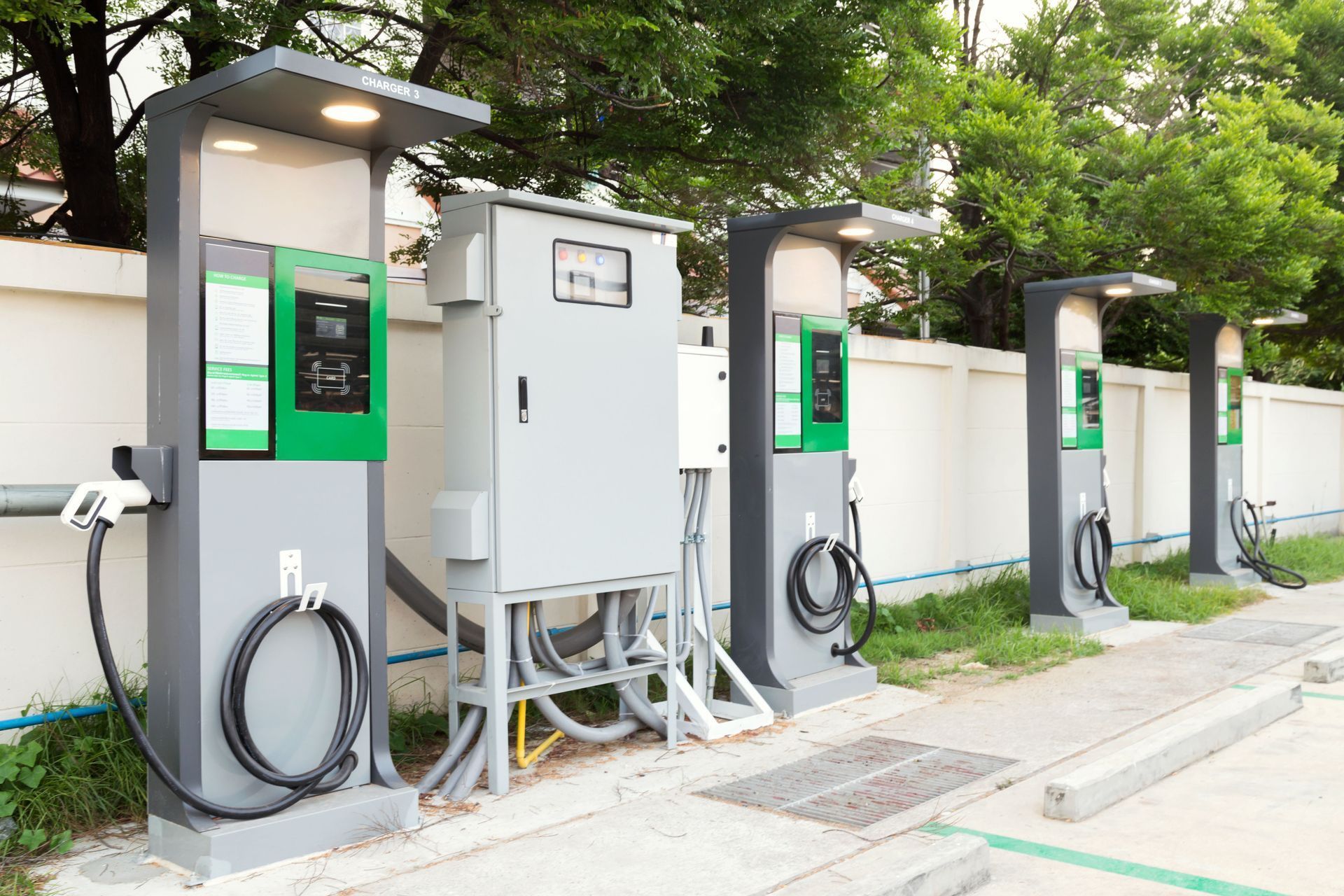
Residential EV Car Charger installation in Rochester, MN
The point of charging at home isn't speed. It's that charging stops being something you think about. You plug in when you park, and you leave every morning with a full battery — no detours, no waiting at a public station, no planning your week around where you can top up.
Public charging turns back into what it should be: a road trip tool rather than part of your routine. Getting there takes a properly sized circuit, a charger matched to your vehicle, and a panel that can carry the load — which is the part worth checking before anything is ordered.
Signs Level 1 Charging Isn't Keeping Up
- The battery isn't full in the morning after charging overnight
- You're planning your driving around when you can charge
- Your commute got longer, or a second EV joined the household
- You're using public chargers for routine daily charging
- Charging slows noticeably once cold weather arrives
- You're running the charging cord through a window or across a garage on an extension cord
That last one is worth acting on now. EV charging draws heavily for hours at a time, and extension cords are not built for that duty.
Level 1 & Level 2 Charging Explained
Level 1
Level 1 is the cord that came with the car plugged into an ordinary outlet. It needs no installation and adds only a few miles of range per hour — fine for a plug-in hybrid or a short commute, and not much else.
Level 2
Level 2 runs on a 240-volt circuit, the same class of service as an electric dryer, and typically restores a full battery overnight. This is what almost every home installation means, and it's what we install: hardwired units or a properly rated receptacle, sized to the charger and the vehicle.
DC Fast Charging
DC fast charging belongs to commercial and public sites. It requires power well beyond what a house is served with, so it isn't a residential option — worth knowing before you shop, since it appears in a lot of marketing.
What You Get With Every Repair
- Same-day services & repairs available
- Estimates within 1–3 business days
- Class A Electrical Contractor, License EA 006322
- Certified, licensed & fully insured electricians
- Quality products on every repair
- Locally & family-owned in Rochester since 1998
- Satisfaction guaranteed
Will Your Panel Support a Charger?
This is the question that decides the quote, and it's why two identical houses can get very different numbers.
A Level 2 charger is a large continuous load rather than an occasional one, and it has to fit alongside everything the house already draws. Plenty of Rochester homes still on original 100 amp service can't add one without a change at the panel, particularly with electric heat, a range, a dryer, or central air already in the mix. Others have capacity to spare.
We run a load calculation before quoting rather than after, so the estimate reflects the real job. If a panel upgrade is needed, you'll hear it up front along with what it costs — and if it isn't, that's worth knowing too.
Frequently Asked Questions
How long does an EV charger installation take?
A straightforward residential Level 2 installation is commonly two to four hours. Distance from the panel, whether the run is through finished space, and any panel work required all extend it. If a service upgrade is needed first, that's a separate day-scale job.
What kind of charger do I need?
For most drivers, a Level 2 unit sized to what your vehicle can actually accept — there's no benefit in paying for a charger faster than the car can use. Your daily mileage and the vehicle's onboard charger decide it. Tell us what you drive and we'll size it with you.
Can I install a charger in an older home?
Usually yes, though older homes are more likely to need panel work first. Original 100 amp services and full panels are the two most common obstacles in Rochester's older housing, and both are solvable. The load calculation tells you which applies before you commit.
Do I need a permit for an EV charger?
Yes. Adding a 240-volt circuit is permitted and inspected work, and that inspection is worth having on a circuit that will run at high load for hours at a time. We handle the permitting.
Can I just use the outlet that's already in my garage?
Rarely a good idea. A standard garage receptacle is a shared 120-volt circuit, which means Level 1 speeds and a circuit carrying a heavy continuous load it wasn't designed for. A dedicated circuit is the right answer, and it's most of the work either way.
Request a Free Estimate
Tell us what you drive, where you park, and where your panel is, and we'll tell you what the installation involves. Call, text, or fill out the form to request a free estimate. We're open Monday through Friday, 7:30 a.m. to 5:00 p.m., with after-hours appointments available.